Most people who want to lose fat don’t have a motivation problem. They have a structure problem.
They know they should be exercising. They probably even know roughly what kinds of exercise work. But without a clear, progressive plan that tells them exactly what to do each week — and why — they default to whatever feels right in the moment, bounce between cardio and weights, hit a wall around week three, and conclude that their body “just doesn’t respond” to exercise.
It’s not their body. It’s the absence of a system.
This 12-week program is that system. It’s built on the three pillars that the research consistently identifies as the most effective for fat loss with muscle preservation: progressive resistance training, strategic cardio, and a structured escalation of difficulty over time. The plan is divided into three four-week phases, each one building on the last — so your body never fully adapts, your results don’t plateau, and you finish week twelve significantly leaner, stronger, and more metabolically capable than when you started.
No equipment list longer than a set of dumbbells and a bench. No workouts exceeding 60 minutes. No days that require you to be already fit to survive.
Let’s build this from the ground up.
1. The Science Behind the 12-Week Structure
Twelve weeks isn’t an arbitrary timeframe. It maps directly onto how human physiology responds to structured exercise stimulus.
Weeks 1–4 are the neurological adaptation phase. In the first month of a new training program, most of the strength gains you experience come from your nervous system becoming more efficient at recruiting muscle fibers — not from actual muscle growth. This phase builds the movement patterns, motor pathways, and connective tissue resilience that allow harder training in later phases without injury.
Weeks 5–8 are the primary hypertrophy and fat loss phase. With movement patterns established and connective tissue adapted, training volume and intensity can increase meaningfully. This is where the majority of body composition change occurs — fat comes off, muscle begins to develop visibly, and cardiovascular capacity increases noticeably.
Weeks 9–12 are the intensification phase. Training difficulty peaks, metabolic demand is highest, and the combination of established fitness and escalated challenge produces the most dramatic visible change of the program. This is also the phase where most people are tempted to quit — because it’s genuinely hard. That difficulty is the signal that it’s working.
The underlying mechanism throughout is progressive overload — gradually increasing the demand placed on the body so adaptation continues rather than plateauing. Research consistently confirms that progressive overload is the single most important variable in resistance training outcomes, whether the goal is muscle gain, fat loss, or both.
2. What You Need Before You Start
Equipment
The program is designed for gym access, but most exercises can be adapted for home training with adjustable dumbbells and a bench or sturdy chair.
Minimum requirements:
- A set of dumbbells (or access to a dumbbell rack)
- A barbell and plates (or substitution with heavy dumbbells)
- A bench or step
- Resistance bands (optional but useful)
- A pull-up bar or lat pulldown machine
Measurements to Take Before Week 1
Don’t skip this. The number on the scale is the least informative measure of progress during a fat-loss program — especially one that involves resistance training, where simultaneous muscle gain can mask fat loss on the scale.
Record before starting and every 4 weeks:
- Body weight (daily average over a week, not a single reading)
- Waist circumference (at the navel)
- Hip circumference (at the widest point)
- Chest, arm, and thigh measurements
- Progress photos (front, side, back) in consistent lighting and clothing
Baseline Fitness Assessment
Before Week 1, test and record:
- Maximum push-ups in one set (to failure)
- Maximum bodyweight squats in one set (to failure)
- Plank hold time (to failure)
- 1-mile walk or run time
Retest at the end of each phase. The numbers will move faster than you expect.
3. Phase 1 (Weeks 1–4): Build the Foundation
Goal: Establish movement patterns, build connective tissue resilience, introduce the body to structured resistance training and moderate cardio, create initial calorie deficit through activity.
Training frequency: 4 days per week (3 strength + 1 dedicated cardio) Daily step target: 8,000+ steps
Weekly Schedule — Phase 1
| Day | Session |
|---|---|
| Monday | Strength — Full Body A |
| Tuesday | Cardio — Zone 2 (30 min) |
| Wednesday | Rest or light walking |
| Thursday | Strength — Full Body B |
| Friday | Rest or light walking |
| Saturday | Strength — Full Body A |
| Sunday | Rest |
Full Body A — Phase 1
| Exercise | Sets | Reps | Rest |
|---|---|---|---|
| Goblet squat | 3 | 12 | 60 sec |
| Dumbbell Romanian deadlift | 3 | 12 | 60 sec |
| Dumbbell bench press | 3 | 12 | 60 sec |
| Dumbbell bent-over row | 3 | 12 | 60 sec |
| Dumbbell overhead press | 3 | 12 | 60 sec |
| Plank hold | 3 | 30 sec | 45 sec |
Full Body B — Phase 1
| Exercise | Sets | Reps | Rest |
|---|---|---|---|
| Dumbbell reverse lunge | 3 | 10 each leg | 60 sec |
| Dumbbell sumo deadlift | 3 | 12 | 60 sec |
| Incline dumbbell press | 3 | 12 | 60 sec |
| Lat pulldown or assisted pull-up | 3 | 12 | 60 sec |
| Dumbbell lateral raise | 3 | 15 | 45 sec |
| Dead bug | 3 | 8 each side | 45 sec |
Phase 1 Key Principles
Start lighter than you think you need to. The goal in weeks 1–4 is not to go as heavy as possible — it’s to learn the movements, build the neural pathways, and allow tendons and ligaments to adapt. Week 1 should feel manageable. You’re setting the floor, not the ceiling.
Focus on form above everything. A poorly executed heavy squat is worth less than a perfectly executed lighter one. Record yourself from the side if possible — most people’s form looks significantly different from what they imagine.
Add weight when you can complete all reps with good form. The rule: if you hit all sets and reps cleanly, add 2.5–5kg (5–10 lbs) to the movement at the next session. This is progressive overload in practice.
Expected results in Phase 1: Most people lose 1–3 kg of fat during weeks 1–4, with scale weight sometimes showing more due to water weight reduction. Body measurements typically show 1–4 cm reduction at the waist. Don’t panic if the scale doesn’t move dramatically — the foundation being built here multiplies results in phases 2 and 3.
4. Phase 2 (Weeks 5–8): Increase the Intensity
Goal: Escalate training volume, introduce HIIT, progress to upper/lower split for greater per-session volume on each muscle group, accelerate fat loss.
Training frequency: 5 days per week (4 strength + 1 dedicated HIIT) Daily step target: 9,000+ steps
Phase 2 makes two structural changes that significantly increase the training stimulus: moving from full-body training to an upper/lower split (which allows more volume per muscle group per session), and introducing HIIT cardio to increase weekly calorie expenditure and afterburn effect.
Weekly Schedule — Phase 2
| Day | Session |
|---|---|
| Monday | Strength — Upper Body |
| Tuesday | Strength — Lower Body |
| Wednesday | HIIT (20–25 min) |
| Thursday | Strength — Upper Body |
| Friday | Strength — Lower Body |
| Saturday | Zone 2 cardio or long walk (40–45 min) |
| Sunday | Rest |
Upper Body — Phase 2
| Exercise | Sets | Reps | Rest |
|---|---|---|---|
| Barbell or dumbbell bench press | 4 | 8–10 | 75 sec |
| Barbell or dumbbell bent-over row | 4 | 8–10 | 75 sec |
| Incline dumbbell press | 3 | 10–12 | 60 sec |
| Seated cable row or dumbbell row | 3 | 10–12 | 60 sec |
| Dumbbell overhead press | 3 | 10–12 | 60 sec |
| Pull-ups or lat pulldown | 3 | 8–10 | 60 sec |
| Tricep dips or pushdowns | 2 | 12–15 | 45 sec |
| Dumbbell curl | 2 | 12–15 | 45 sec |
Lower Body — Phase 2
| Exercise | Sets | Reps | Rest |
|---|---|---|---|
| Barbell back squat or goblet squat | 4 | 8–10 | 90 sec |
| Romanian deadlift | 4 | 8–10 | 90 sec |
| Walking lunges | 3 | 10 each leg | 60 sec |
| Leg press or Bulgarian split squat | 3 | 10–12 | 75 sec |
| Leg curl (machine or Nordic) | 3 | 10–12 | 60 sec |
| Calf raise | 3 | 15–20 | 45 sec |
| Plank with shoulder tap | 3 | 10 each side | 45 sec |
HIIT Session — Phase 2
Choose one format and rotate:
Option A — Sprint intervals: 5-min walk warm-up → 8 rounds of: 30 sec all-out effort (running, cycling, rowing) / 90 sec easy recovery → 5-min walk cooldown. Total: ~25 minutes.
Option B — Bodyweight circuit: 4 rounds of: Jump squats (40 sec) / Mountain climbers (40 sec) / Burpees (40 sec) / High knees (40 sec) — 20 sec rest between exercises, 90 sec rest between rounds. Total: ~22 minutes.
Option C — Rowing machine: 5-min easy warm-up → 10 rounds of: 20 sec maximum effort / 40 sec easy → 5-min cooldown. Total: ~20 minutes.
Phase 2 Key Principles
The reps come down, the weight goes up. Moving from 12 reps to 8–10 reps means using heavier weights. The higher mechanical tension from heavier loading is a more potent muscle-building and metabolic stimulus.
HIIT is hard — treat it that way. The “high intensity” in HIIT means maximum or near-maximum effort during the work intervals. If you’re comfortable during those intervals, you’re not going hard enough. They should feel genuinely difficult to finish.
Don’t skip the Saturday cardio. The temptation in week 6 or 7 is to reduce training because the volume is high. Resist it. The accumulated weekly calorie expenditure from that Saturday session compounds the fat loss meaningfully.
Expected results in Phase 2: This is typically where the most visible change occurs. Most people lose an additional 2–4 kg during weeks 5–8, with waist measurements reducing by 3–6 cm from baseline. Strength increases become more dramatic — it’s common to add 10–20% to compound lift weights over the four weeks.
5. Phase 3 (Weeks 9–12): Push for Peak Results
Goal: Maximize fat loss, peak physical performance, and body composition change through the most demanding training block of the program.
Training frequency: 5 days per week (4 strength + 1 HIIT, with active recovery on two days) Daily step target: 10,000+ steps
Phase 3 introduces two techniques that research supports for maximizing both calorie burn per session and muscle stimulus: supersets (pairing two exercises with minimal rest between them) and drop sets (reducing weight and immediately performing more reps after reaching failure).
Weekly Schedule — Phase 3
| Day | Session |
|---|---|
| Monday | Strength — Push (chest, shoulders, triceps) |
| Tuesday | Strength — Pull (back, biceps) |
| Wednesday | HIIT (25–30 min) |
| Thursday | Strength — Legs (quads, hamstrings, glutes) |
| Friday | Strength — Full Body metabolic circuit |
| Saturday | Zone 2 cardio (45–50 min) or long walk |
| Sunday | Rest |
Push Day — Phase 3 (supersets marked with *)
| Exercise | Sets | Reps | Rest |
|---|---|---|---|
| Barbell bench press | 4 | 6–8 | 90 sec |
| *Incline dumbbell press | 3 | 10 | — |
| *Dumbbell lateral raise | 3 | 15 | 60 sec |
| *Overhead press | 3 | 10 | — |
| *Face pull / rear delt fly | 3 | 15 | 60 sec |
| Tricep pushdowns (drop set on final set) | 3 | 12 | 60 sec |
Pull Day — Phase 3
| Exercise | Sets | Reps | Rest |
|---|---|---|---|
| Pull-ups or weighted pull-ups | 4 | 6–8 | 90 sec |
| Barbell row | 4 | 8 | 90 sec |
| *Seated cable row | 3 | 10 | — |
| *Straight-arm pulldown | 3 | 12 | 60 sec |
| Dumbbell curl (drop set on final set) | 3 | 10 | 60 sec |
| Hammer curl | 2 | 12 | 45 sec |
Leg Day — Phase 3
| Exercise | Sets | Reps | Rest |
|---|---|---|---|
| Barbell back squat | 4 | 6–8 | 120 sec |
| Romanian deadlift | 4 | 8 | 90 sec |
| Bulgarian split squat | 3 | 10 each leg | 75 sec |
| Leg press (drop set on final set) | 3 | 10 | 75 sec |
| Lying leg curl | 3 | 12 | 60 sec |
| Weighted hip thrust | 3 | 12 | 60 sec |
Full Body Metabolic Circuit — Phase 3 (Friday)
This session is specifically designed to maximize calorie expenditure and create a significant EPOC effect heading into the weekend.
4 rounds, minimal rest between exercises (30 sec), 90 sec rest between rounds:
- Barbell or dumbbell front squat — 10 reps
- Push-ups (weighted if possible) — 15 reps
- Dumbbell Romanian deadlift to upright row — 10 reps
- Box jump or squat jump — 10 reps
- Dumbbell renegade row — 8 each side
- Burpee to pull-up (or jump squat) — 8 reps
Total session time: approximately 30–40 minutes. This is the hardest single session of the program. Expect to be significantly challenged.
Phase 3 Key Principles
Supersets increase calorie burn by 30–40% per unit of time. Pairing exercises that work different muscle groups (push/pull pairings are ideal) allows one muscle group to recover while the other works. Your heart rate stays elevated, more work gets done in less time, and the metabolic demand per session increases substantially.
Drop sets extend the muscle stimulus beyond normal failure. Reaching failure with a given weight, immediately reducing by 20–30% and continuing — this extends the time under tension and recruits additional muscle fibers. Use sparingly (one to two exercises per session) to avoid overtraining.
The final four weeks should feel harder than anything you’ve done. If phase 3 feels similar to phase 1, you haven’t progressed the weights enough. The objective numbers — weight on the bar, reps completed — should be significantly higher than week one.
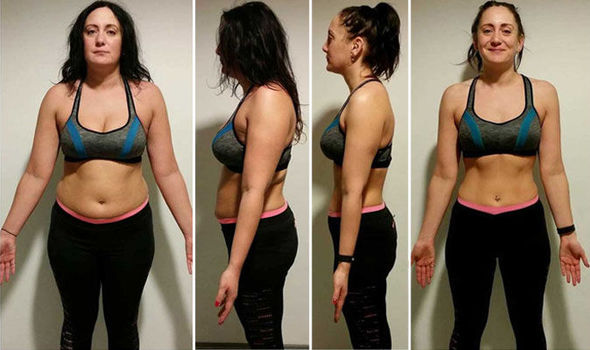
Expected results in Phase 3: Most adherents lose an additional 2–4 kg during weeks 9–12, bringing total program fat loss to 5–11 kg over 12 weeks. Strength on major lifts is typically 20–40% higher than baseline. Body composition photos from week 12 versus week 1 are usually dramatically different even when scale weight difference is modest — reflecting the simultaneous muscle development.
6. The Cardio Strategy: How to Layer It In
The cardio in this program is strategic, not punishing. Here’s the architecture:
Zone 2 cardio (60–70% max heart rate — you can hold a conversation but feel mildly challenged): brisk walking, easy cycling, light jogging. This trains fat oxidation at the cellular level, improves aerobic base, and burns meaningful calories without the appetite spike that high-intensity cardio can cause.
HIIT (near-maximum effort intervals with active recovery): Creates significant EPOC — elevated calorie burning for 14–24 hours post-session. Time-efficient and highly effective, but taxing. Limited to 1–2 sessions per week to avoid overtraining.
Daily steps are not optional. The 8,000–10,000 daily step target burns 200–400 additional calories per day that compound to 1,400–2,800 per week — roughly equivalent to an extra workout’s worth of energy expenditure, with no recovery cost.
A practical note on cardio and hunger: High-intensity cardio in some people triggers significant appetite increases post-session. If you find yourself dramatically hungrier after HIIT than after strength sessions, try shifting your HIIT to the afternoon and ensuring you eat a protein-rich meal within 60–90 minutes of finishing. Managing post-exercise hunger is as important as the session itself for net fat loss.
7. Nutrition Principles That Make the Plan Work
This program produces results without a precise diet plan, but it produces dramatically better results with deliberate nutrition. Four principles cover most of what matters:
Protein is the most important variable. Aim for 1.6–2.2g of protein per kg of body weight daily. This preserves muscle during the caloric deficit, keeps you fuller per calorie than carbohydrates or fat, and has the highest thermic effect of any macronutrient (your body burns 20–30% of protein calories just digesting it). Best sources: chicken breast, fish, eggs, Greek yogurt, cottage cheese, lean beef, protein powder as a convenient supplement.
Create a moderate calorie deficit — not an aggressive one. For most people, a daily deficit of 300–500 calories below maintenance produces 0.3–0.5 kg of fat loss per week — the rate at which muscle preservation is most effectively maintained. Calculate your TDEE (Total Daily Energy Expenditure) and subtract 300–500 calories. Don’t go below your BMR.
Time carbohydrates around training. Eating the majority of your daily carbohydrates in the pre- or post-workout window fuels performance and recovery while reducing the likelihood of excess carbohydrates being stored as fat. Pre-workout: oats, fruit, rice. Post-workout: rice, potatoes, fruit, oats.
Prioritize whole foods and high fiber. Ultra-processed foods are engineered to override satiety signals — they make overeating nearly effortless. Whole foods (vegetables, lean proteins, legumes, whole grains) come with fiber and protein that blunt hunger and support gut health. Aim for 25–38g of fiber daily.
8. Recovery: The Overlooked Half of the Equation
The training sessions in this program create the stimulus for fat loss and muscle adaptation. The actual changes happen during recovery — and without adequate recovery, the training stimulus is wasted.
Sleep is the most anabolic thing you do. Growth hormone — the primary driver of fat metabolism and muscle repair — is secreted primarily during deep sleep. Research shows that sleeping 5.5 hours versus 8.5 hours for two weeks (at the same calorie intake) results in 55% less fat lost and 60% more muscle lost. That’s an enormous effect from one lifestyle variable. Protect your sleep like the performance investment it is: 7–9 hours, consistent schedule, dark and cool room.
Post-workout nutrition matters most in phases 2 and 3. After a demanding strength session, a meal or shake containing 30–50g of protein and some carbohydrates within 1–2 hours supports muscle protein synthesis and glycogen replenishment — accelerating recovery and ensuring you can train quality in the next session.
Deload if you need it. If in week 7 or 10 you notice significant drops in strength, persistent joint discomfort, disrupted sleep, or extreme fatigue that doesn’t resolve after rest days, take a deload week — reduce all weights to 50–60% of normal, perform all planned sessions, and give the central nervous system time to recover. One week of reduced load will not cost you progress. Pushing through injury or overtraining will.
Active recovery beats passive rest. On rest days, light walking (30 minutes), swimming, mobility work, or yoga promotes blood flow to muscles without adding significant training stress — typically accelerating recovery compared to complete inactivity.
9. How to Track Your Progress Properly
Weigh yourself daily, read it weekly. Daily weight fluctuates by 1–3 kg based on water, sodium, carbohydrate intake, and hormones. Judging progress by a single morning reading is emotionally counterproductive and statistically meaningless. Take a 7-day average each week and compare week to week.
Body measurements every 4 weeks. Waist circumference is the single most meaningful metric for fat loss progress — it tracks visceral fat reduction more directly than scale weight and is unaffected by muscle changes.
Strength log every session. Note the weight and reps for every exercise in every session. This is your clearest objective measure of progressive overload — and the most motivating record to look back on at week 12. Seeing that you’ve added 30% to your squat since week 1 is more meaningful than any scale reading.
Progress photos at weeks 1, 4, 8, and 12. Same time of day (morning, fasted), same lighting, same clothing, same poses. Photo comparisons over 12 weeks are often the most striking evidence of change — changes that accumulated so gradually you stopped noticing them in the mirror.
Performance benchmarks. Retest your week-one baseline assessments (push-ups, bodyweight squats, plank hold, walk/run time) at the end of each phase. Most people find these markers improve dramatically — which is independently motivating and a clear indicator that the program is working.
10. Frequently Asked Questions
How much fat can I realistically lose in 12 weeks? With consistent training and a moderate calorie deficit, 5–10 kg of fat loss over 12 weeks is a realistic and well-supported range for most adults. The exact amount depends on starting body composition, dietary adherence, sleep quality, and consistency. People starting from a higher body weight typically lose more in the same period.
Can I follow this program as a complete beginner? Yes, but with one modification: spend the first two weeks of Phase 1 at 50–60% of the weights you think you can handle. The program’s Phase 1 is designed to be accessible, but complete beginners benefit from an extra buffer in the first two weeks to allow connective tissue adaptation before adding weight.
What if I miss a session? Don’t try to “make it up” by doubling the next session. Simply continue the program from where you left off. Missing one session in 12 weeks doesn’t meaningfully affect results. Missing sessions habitually does. The most important principle for the full 12 weeks is consistency — not perfection.
Do I need to follow a specific diet with this plan? Not a specific diet — but nutritional principles matter. If your training is dialed in but your calorie intake isn’t in a deficit, fat loss will stall. The program creates the conditions for fat loss; the diet is what ensures those conditions translate into actual change. Prioritize protein, moderate your overall calorie intake, and focus on whole foods as the primary strategy.
What should I do after week 12? Take a full deload week — all planned sessions at 50% load, no HIIT, daily walking only. Then reassess. Most people choose to run the program again from Phase 1 with higher starting weights, or transition to a more specialized program based on what Phase 3 revealed about their strengths and weaknesses. Your week-12 fitness level becomes week-1 of whatever comes next.
The Bottom Line
Twelve weeks is enough time to meaningfully transform your body composition — but only if the 12 weeks are structured, progressive, and consistent. The program above provides the structure and the progression. The consistency is yours to provide.
It won’t always be convenient. There will be weeks 6 and 10 where the sessions feel hard and the scale isn’t moving and the couch looks infinitely preferable. That’s not failure approaching — that’s the inflection point where people who finish separate from people who don’t.
The body you want to have at week 12 is built in the sessions that were hardest to show up for.
Start week 1. Show up for week 2. That’s the whole plan.